
THE HANTAVIRUS: A NEW OUTBREAK IN 2026?
INTRODUCTION
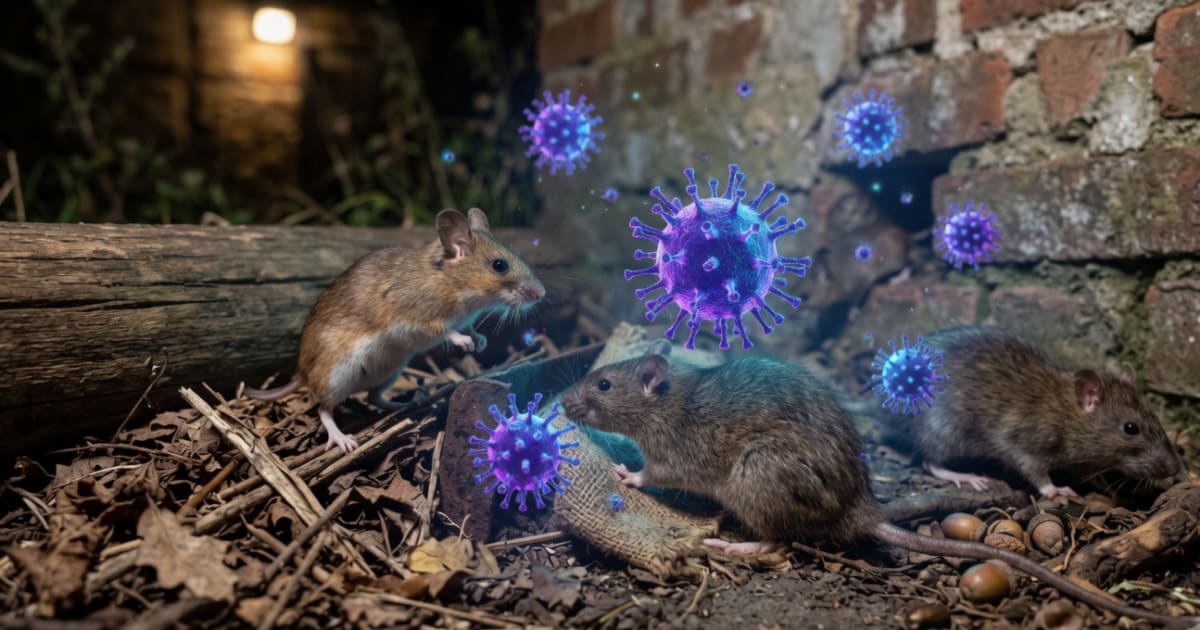
The "hantavirus" entered global headlines once again - linked to a cluster of severe respiratory illness aboard a cruise ship in the South Atlantic. While the term is used as though it refers to a single pathogen, hantavirus is actually an embrella term for a large family of RNA viruses that circulate silently in wild rodent populations across several continents. Humans can be infected when they come into contact with infected rodents or their urine excrete or their bodily fluids. This article highlights a comprehensive yet concise overview of the hantavirus family: its history and the current state and threat of the virus.
KEY FACTS
• Hantavirus refers to a family of RNA viruses; there is no single “hantavirus.”
• Estimated 100,000 human cases occur annually worldwide, with the heaviest burden in China and the Republic of Korea (WHO).
• Case fatality rates: 1–15% for Old World strains (Asia/Europe); up to 50% for New World strains (Americas).
• The 2026 outbreak involves the Andes virus — the only hantavirus known to spread person-to-person.
• The WHO has confirmed this is not a pandemic and the general public risk remains low.
Causative Organism
Hantaviruses are negative-sense, single-stranded RNA viruses belonging to the family Hantaviridae (order Bunyavirales).
Unlike most members of the Bunyavirales order, hantaviruses are not transmitted by arthropod vectors (insects or ticks). Instead, each hantavirus species has co-evolved with a specific reservoir rodent host in which it causes persistent, asymptomatic infection. Humans are dead-end hosts — the virus does not complete its ecological cycle within us.
Why is it Called “Hantavirus”?
The name derives from the Hantan River in South Korea, near which the prototype virus, Hantaan orthohantavirus (HTNV), was first isolated in 1978 by virologist Ho Wang Lee. The isolation followed an investigation into Korean Hemorrhagic Fever, which had afflicted more than 3,000 United Nations soldiers during the Korean War (1951–1953). Because HTNV was the founding member of the genus, the entire group of related viruses became collectively known as hantaviruses.
Main Viruses in the Family
More than 50 hantavirus species have been identified to date, but they are most meaningfully divided into two geographic groups with distinct clinical presentations in humans.
New World Hantaviruses (The Americas)
These viruses primarily target the lungs, causing Hantavirus Pulmonary Syndrome (HPS) or Hantavirus Cardiopulmonary Syndrome (HCPS). They carry the highest fatality rates of the family:
• Andes virus (ANDV) — Found in South America (Argentina, Chile, and surrounding countries), carried by the long-tailed pygmy rice rat. ANDV is unique in being the only hantavirus confirmed to transmit from human to human, making it the most epidemiologically significant strain. It is the suspected causative agent in the 2026 cruise ship outbreak.
Transmission Mechanisms
Rodent-to-Human (Primary Route)
• Inhalation of aerosolised particles — The dominant route. Dried urine, faeces or saliva from infected rodents are disturbed (e.g., sweeping, construction, entering unused buildings) and microscopic particles are inhaled.
• Direct contact — Touching rodents, their droppings, or contaminated surfaces then touching mucous membranes.
• Rodent bites — Less common but documented.
Human-to-Human (Andes Virus Only)
The Andes virus is the sole exception to the rule that hantaviruses do not spread between people. Evidence from outbreak investigations in Argentina and Chile indicates person-to-person transmission occurs through close, prolonged contact with an infected individual’s respiratory secretions. This characteristic is what makes the 2026 cruise ship cluster particularly significant: confined spaces and close passenger contact create ideal conditions for Andes virus to propagate beyond its normal rodent reservoir.
Signs and Symptoms
Hantavirus Cardiopulmonary Syndrome (HCPS)
• Prodromal phase (days 1–5): Fever, fatigue, myalgia (muscle aches), headache, and sometimes gastrointestinal symptoms (nausea, vomiting, diarrhoea). This phase is often misdiagnosed as influenza.
• Cardiopulmonary phase (days 5–8): Rapid onset of cough, severe shortness of breath, and accumulation of fluid in the lungs (non-cardiogenic pulmonary oedema). Cardiogenic shock may supervene with dramatic falls in blood pressure. This is the life-threatening stage.
• Convalescent phase: Survivors who clear the crisis begin to diurese the excess fluid and gradually recover over weeks to months.
Hemorrhagic Fever with Renal Syndrome (HFRS)
HFRS has five classical phases:
• Febrile (days 1–3): Sudden high fever, chills, intense headache, back pain, and abdominal pain.
• Hypotensive (days 3–6): Fluid leakage from blood vessels leads to a drop in blood pressure and possible shock.
• Oliguric (days 6–12): Kidney failure (reduced or absent urine output), haemorrhagic manifestations such as petechiae and bleeding disorders.
• Diuretic phase: Kidney function begins to return; massive urine output requires careful fluid management.
• Convalescent phase: Full recovery may take weeks to months; residual hypertension is possible.
Diagnosis
Early diagnosis is challenging because the prodromal symptoms of hantavirus infection closely mimic influenza, COVID-19, and other febrile illnesses.
Prevention and Control
There is currently no licensed vaccine against hantavirus. Prevention therefore relies on reducing exposure to infected rodents and, in the case of Andes virus, preventing person-to-person spread.
To prevent rodent infestations, it is crucial to seal all entry points in buildings and store food securely in rodent-proof containers. When cleaning areas with rodent evidence, avoid dry sweeping or vacuuming, and instead use wet cleaning methods, a 10% bleach solution, and a HEPA-filtered vacuum. Protective gear, including gloves and a properly fitted N95 or equivalent respiratory mask, should always be worn during cleanup. In areas with endemic rodents, avoid handling live or dead rodents and use elevated, enclosed sleeping areas rather than ground-level tents. Finally, to prevent the spread of the Andes virus on cruise ships or other high-risk settings, it is recommended to practice strict hand hygiene, use personal protective equipment, and isolate symptomatic individuals
There is no specific antiviral therapy approved for hantavirus infection in most countries. Treatment is therefore largely supportive and must be delivered in an intensive care setting for moderate-to-severe cases.
The 2026 Cruise Ship Outbreak: What is Special?
• Unusual setting: Hantavirus infection is almost always contracted in rural or semi-rural environments through rodent contact. Cases aboard a cruise ship represent an atypical and potentially high-propagation setting.
• Suspected Andes virus: The involvement of the only human-to-human transmissible hantavirus strain transforms the outbreak dynamics from isolated zoonotic events into a potential person-to-person cluster.
• High case fatality: HCPS caused by Andes virus carries mortality that can exceed 40%, and at least three deaths have already been confirmed.
• International case dispersal: Cruise ship passengers from multiple countries disembarked before the outbreak was identified, complicating contact tracing and raising the possibility of cases appearing across several nations.
The WHO issued a formal Disease Outbreak Notice (DON599), and Africa CDC released a statement on the multi-country cluster. Health authorities are tracking the incubation period (typically 2–4 weeks for hantavirus) to anticipate further cases among exposed passengers and crew.
Conclusion
Hantavirus is not a single disease but a spectrum of severe, sometimes fatal illnesses caused by a diverse family of RNA viruses co-evolved with rodent hosts across the globe. From the original Hantaan virus isolated near a Korean river in 1978 to the Andes virus now implicated in a 2026 cruise ship outbreak, the family continues to pose a significant, if underappreciated, global health threat.
The two syndromes — HFRS and HCPS — are geographically distinct but share a common theme: rapid deterioration in previously healthy individuals, high mortality without intensive supportive care, and no specific approved antiviral for most strains. Prevention therefore hinges on reducing rodent exposure and, for Andes virus, implementing standard infection control precautions in close-contact settings.
Crucially, the WHO Director-General has been explicit: this is not the next COVID-19. Hantavirus, even in its most transmissible form (Andes), does not spread with the ease of SARS-CoV-2, and its overall global risk remains low. However, the gestation period of the current outbreak means additional cases are expected to emerge in the coming weeks as exposed individuals develop symptoms. Continued vigilance, transparent reporting, and a prepared public health infrastructure remain the most important tools available.
COMMENTS (0)
Please sign in with Google to join the conversation.
Sign in with GoogleNo comments yet. Be the first to speak your mind!